
Many people proudly declare that they’ve “moved on” from their past.
They say it with conviction, even relief, as if the past were a room they locked, walked away from, and never needed to revisit again.
It’s an understandable fantasy.
But psychologically, it doesn’t work.
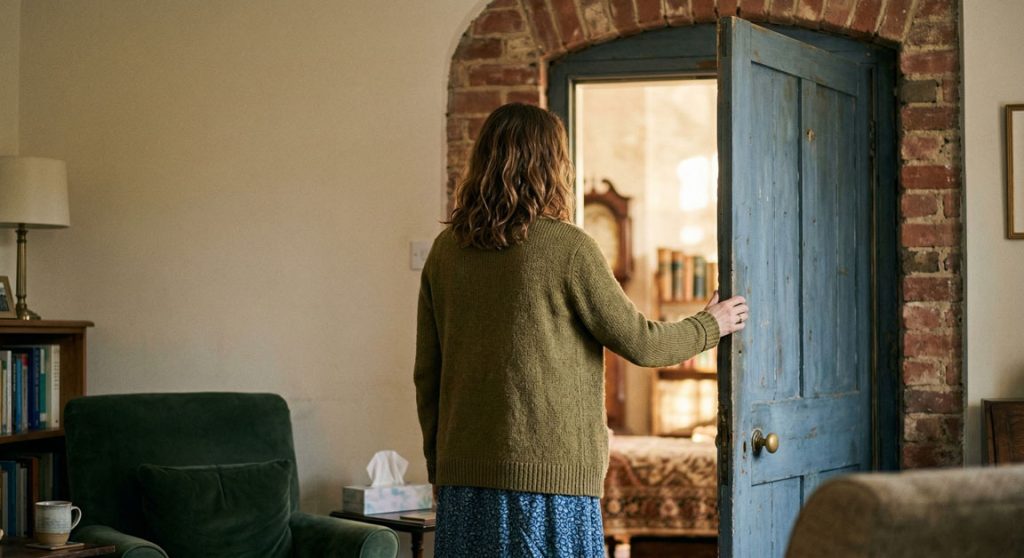
Because the moment you believe you’ve closed the door to your past, you create a blind spot in your present.
And blind spots don’t stay quiet.
They show up in your relationships, your parenting, your leadership, and your emotional reactions, especially the ones that feel “out of nowhere.”
Let’s walk through how this happens.
The Past Doesn’t Disappear, It Goes Underground
When people say they’ve “closed the door,” what they usually mean is:
- I don’t want to think about it.
- I don’t want to feel that again.
- I survived it, so it must be over.
- It’s irrelevant now.
But the emotional brain doesn’t operate on declarations.
It operates on patterns, associations, and internal templates built long before we had language.
When you shut the door on your past, you don’t erase it.
You simply lose sight of how it continues to shape:
- what you fear
- what you avoid
- what you expect from others
- how you interpret tone, silence, conflict, or closeness
- how you protect yourself
The past becomes a kind of unseen operating system, running silently, automatically, and outside your awareness.
That’s the blind spot.
The Blind Spot Shows Up Most Clearly in Relationships
Relationships are where the past leaks through the cracks.
When you believe the past is “behind you,” you stop looking for its influence.
And when you stop looking, you stop noticing:
1. You react to your partner as if they were someone from your past.
A sigh becomes criticism.
A delay becomes abandonment.
A question becomes control.
A disagreement becomes danger.
Not because of what’s happening now, but because of what happened then.
2. You misread emotional signals.
You think you’re responding to the present moment, but you’re actually responding to an old emotional template.
3. You repeat patterns you swore you’d never repeat.
The more convinced you are that the past is irrelevant, the more power it has to quietly shape your choices.
4. You assume your reactions are “just who you are.”
But they’re not personality traits.
They’re survival strategies that never got updated.
Why “Closing the Door” Feels So Convincing
There’s a reason this belief is so seductive.
It gives you:
- a sense of control
- a sense of distance
- a sense of strength
- a sense of finality
It’s emotionally efficient.
It lets you keep moving.
But it also keeps you from seeing the emotional architecture you’re still living inside.
It’s like believing you’ve left a house forever,
while unknowingly carrying the blueprint into every new home you build.
The Real Work Isn’t Closing the Door, It’s Opening It Safely
Therapy isn’t about forcing the door open.
It’s about creating a steady, non‑judgmental space where you can finally stop guarding it.
When the door opens gently, not explosively, you begin to see:
- why certain moments trigger you
- why certain people unsettle you
- why certain patterns repeat
- why certain emotions feel “too much”
And once you see it, you can finally change it.
Not by erasing the past, but by understanding it well enough that it stops running the show.
When the Blind Spot Shrinks, Your Freedom Grows
As the past becomes something you can look at, not hide from, you gain:
- more emotional range
- more choice in how you respond
- more capacity for intimacy
- more patience with yourself and others
- more clarity in conflict
- more compassion for the child you once were
You don’t become someone new.
You become someone less governed by what you couldn’t bear to feel.
That’s the real freedom.
